


Beyond the Cape: Author Dean Baxter Is Building the Black Superhero Universe He Wanted to See Growing Up
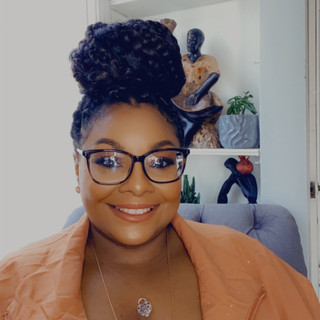

From childhood comic books to a growing science-fiction series, the author behind Black Power: The Book of Akhet is creating heroes who challenge stereotypes and tell stories from a different perspective.
By Keyanna Harper | Obsidian People Company The Creative Corner | Author Spotlight
There's something about the stories we grow up with, They seem to stay with us.
For some of us, it was the comic books. For others, it was cartoons, science-fiction movies, or those Saturday mornings when we'd sit in front of the television imagining what it would be like to have superpowers.
And if you were anything like me, you probably had a favorite superhero. Maybe you even tied a towel around your neck and pretended you could fly like Dean Baxter ,Our Creative Corner Author Spotlight.
For a long time, Black kids were growing up loving these superhero stories without always seeing themselves at the center of them.
We had characters we loved, absolutely. But how often did we get to see a Black character simply exist as the hero, without their entire identity being reduced to a stereotype?
That's part of what author Dean Baxter is exploring through his book, Black Power: The Book of Akhet, and the larger fictional universe he's building around it.
I recently had the opportunity to sit down with Dean for The Creative Corner, and what started as a conversation about his book turned into something much bigger. We talked about childhood, comic books, Black identity, storytelling, publishing, and why representation is about more than simply putting a Black face on a character.
And I have to say, this was one of those conversations we could have keep going about.
A Kid With a Book and a Big Imagination
Dean grew up in San Jose, California, during the 1980s and 1990s.
Like a lot of kids from that era, he spent time riding his bike, hanging out with friends, and finding ways to entertain himself. But one thing he really loved was reading.
And when I say reading, I mean the kind of reading where you're hiding a book behind another book in class, or staying up at night with a flashlight under the covers.
Dean talked about reading Stephen King and Dean Koontz at an age when he probably shouldn't have reading some of those stories, but he did.
That love of books followed him into adulthood and even into his time serving in the U.S. Navy, when reading helped pass the time aboard ship.
But something else helped shape the way he tells stories: Dungeons & Dragons.
He started playing the tabletop games, and watching the game master create these elaborate worlds and characters with so much imagination. Afterward, he asked the questions about how the stories came together.
That's when he began realizing storytelling wasn't just something other people could do.
He could do it, too.
And one piece of advice from his father that he still holds dear throughout his life: he was just as good as anybody else.
I loved hearing that because sometimes that's all it takes. Somebody reminding you that the things you admire in other people aren't necessarily out of your reach.
What Happens When the Black Kid Gets to Be the Hero?
When Dean started talking about the inspiration behind Black Power, we went right back to childhood.
He remembered playing superhero, imagining himself as characters like Superman and Spider-Man.
I could relate to that immediately.
My father is an artist, and growing up, my brother and I had superhero artwork around us that he created himself. We had characters like Storm and Spider-Man brought to life through his drawings and murals.
So comic books and superheroes weren't some distant thing in my childhood. They were part of our world and still is till this day.
But as Dean and I talked, we kept coming back to the same question:
Why did Black characters so often have to fit somebody else's idea of what a Black superhero should look or sound like?
That question is central to the world Dean is building.
His protagonist, Scipio, isn't written as a collection of familiar stereotypes. He's a young Black man from the suburbs. He speaks naturally. His background reflects experiences that don't always get represented in mainstream stories about Black life.
And that's important.
Because Black people don't all come from the same neighborhoods. We don't all talk the same way. We don't have the same interests, personalities, or experiences.
Some of us grew up reading comic books and playing video games. Some of us were the nerdy kids. Some of us were outgoing. Some of us were quiet.
All of those experiences are Black experiences.
I think sometimes people forget that representation isn't just about seeing somebody who looks like you.
It's also about seeing somebody who lives, thinks, dreams, and moves through the world in ways you recognize.
The Superpowers Have a Meaning
One of the things I found interesting about Dean's approach was how deliberately he thought about the abilities he gave his characters.
Scipio is bulletproof.
During our conversation, he connected that ability to the dangers Black people face in the real world, including systemic oppression and physical violence.
There's a powerful message be hide, imagining a Black character whose body cannot be harmed in the ways Black bodies have historically been threatened.
Dean also talked about being intentional with the superhero tropes he wanted to avoid.
Once you start thinking about the pattern, you begin noticing how often certain ideas get recycled.
He wanted to do something different.
And that extends beyond superpowers.
Dean discussed his decision to give his Black protagonist a white best friend who occupies the sidekick role, reversing a familiar dynamic in popular storytelling. He also spoke about creating strong female characters who have their own identities and agency.
The point isn't simply to reverse expectations for the sake of doing something unexpected.
It's to create characters who feel like people rather than formulas.
Comic Books Have Always Been Political. So Why Are We Pretending Otherwise?
Now, this is where our conversation really got interesting.
Because you can't talk about Black superheroes, representation, and the history of comics without eventually talking about the world those stories come from.
Dean and I discussed the X-Men and how the mutants' experiences have often reflected discrimination, exclusion, and the struggle to be accepted.
Think about it.
These are characters who are feared because they're different. They are judged for something they didn't choose, and many of them just want the freedom to live their lives.
Very familiar huh?
We also talked about how comic books have addressed social issues for decades.
Sometimes people act like conversations about race, inequality, or identity are brand-new additions to superhero storytelling.
But those themes have been part of the medium for generations.
And that's why I find some of the current arguments around representation so interesting.
People will say they don't want politics in their entertainment, while celebrating characters and stories that were shaped by political and social realities from the very beginning.
Dean brought up Black Panther and the history surrounding the character's creation, which led us into a larger discussion about what comics have been allowed to say and how those stories have evolved.
For me, the bigger point is this:
Art has always reflected the world we live in.
Sometimes it entertains us. Sometimes it challenges us. And sometimes it gives us a way to talk about things that are difficult to confront directly.
That's what makes storytelling so powerful.
Building a Universe, Not Just Writing One Book
Dean isn't approaching Black Power as a single, disconnected superhero story.
He's building an interconnected universe.
He talked about being influenced by Stephen King's approach to storytelling, where different books and characters can exist within a larger connected world.
Scipio serves as a central figure in Dean's universe, but the world extends beyond him.
That kind of storytelling takes planning, especially when you're thinking about how different characters, histories, and events connect.
And what's interesting is how much Dean's writing process has changed.
He spent roughly seven years developing and bringing his first book to publication.
But once he found his rhythm, the writing began moving much faster. He described completing his second book in about two months and his third in about three.
He's now developed a larger body of interconnected stories, including The Book of Peret and a project titled Beneath Another Sky.
When you spend years learning your craft and finally begin trusting your ability to do it, a whole another world opens up.
The work doesn't necessarily become easy.
But you become more confident in how to approach it.
Seven Years to Get One Book Published
I think this is the part of Dean's story that a lot of creatives need to hear.
Because we often see the finished product without knowing what somebody had to go through to get there.
Dean talked about spending years working toward publishing his first book.
At one point, an editor he'd been working with stopped communicating after completing only part of the manuscript.
Imagine putting that much time and energy into something, trusting someone to help you finish it, and then having to figure out how to move forward on your own.
But Dean kept going.
He eventually finished the editing process himself and connected with the publisher Sculpted Word.
And that persistence became one of the biggest themes of our conversation.
We talked about how difficult it can be to put yourself and your work in front of people, especially when you're naturally more comfortable creating than promoting.
Even getting in front of a camera can be intimidating.
I know that experience myself.
Sometimes you have to push past being uncomfortable because you believe in what you're building.
And that's something Dean understands.
What He Wants Young Black Readers to Know
When I asked Dean what he wanted young readers to take away from his work, the message came back to persistence.
He wants them to understand that they can do hard things.
That they don't have to give up because something takes longer than expected.
And that their ideas are worth pursuing.
I think that's especially important for young Black creatives.
Because talent is one thing. But believing that you have the right to create, to take up space, and to tell your own stories is another.
We need young people to understand that they don't have to wait for somebody to give them permission.
They can write the book.
They can create the character.
They can build the world.
And yes, they can be the hero of their own story.
Why Conversations Like This Matter
One of the reasons I created Obsidian People was to make room for conversations like this.
There are so many Black artists, writers, and creatives doing incredible work, and too often, people don't know about them.
Not because the work isn't good.
But because visibility, access, and opportunity aren't distributed equally.
And I believe we have a responsibility to support the people who are creating the stories, images, music, and art that reflect our communities.
That doesn't always mean doing something big.
Sometimes it means buying the book. Sharing the work. Recommending an artist to a friend. Or simply taking the time to learn about somebody whose work you haven't encountered before.
Dean Baxter is building a superhero universe that draws from his own experiences, his love of comics, and his belief that Black characters deserve the freedom to be fully realized people.
And after talking with him, I walked away thinking about what goes into creating the work he has done.
We deserve stories that reflect the full range of who we are.
Not just our struggles. Not just the stereotypes. Not just the versions of Black life that other people are comfortable seeing.
All of it.
The imagination. The humor. The complexity. The joy. The contradictions. The possibilities.
Because Black storytelling has never been one thing.
And it shouldn't have to be.
Explore Dean Baxter's Work
Dean Baxter is the author of Black Power: The Book of Akhet and is continuing to develop stories within his interconnected superhero universe.
Book One: The Book of Akhet
Amazon: https://a.co/d/f4B4x8y
Book Two: The Book of Peret
Amazon: https://a.co/d/0eeFH8gI
Author website: https://an-ansi.com
Author message:
To everyone who’s been riding with me, thank you. And if you’re just discovering Black Power, come see what I’ve been talking about. I’ve got a story to tell, and I’d love for you to be part of the ride.
Welcome to the Riders. Enjoy the Ride.
Dean Baxter
Check out the full interview here:
This conversation is part of The Creative Corner, an Obsidian People series highlighting the artists, writers, and creatives shaping our culture through their work.
Obsidian People: Where art is our culture and culture is our art.


Comments