


The Black Women’s Health Gap Is Not An Accident - It’s By Design
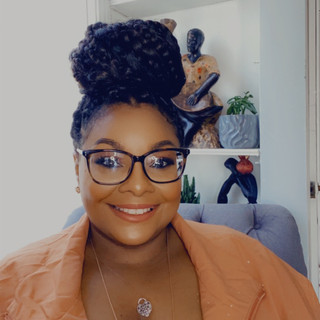

I'm not a stranger to witnessing how health gaps affects lives in real-time. My daughters lost their mother several years ago. She passed away from complications during childbirth. A woman who was supposed to come home with a baby, and excitement didn't and this left our lives forever changed. Every time I scroll through my feed and see another story another Black woman ignored, dismissed, turned away, or left alone in a hospital room that anger of why gets louder.
We are not losing our lives because we are weak. We are losing them because a system that was never built for us keeps proving it doesn’t care if we live or die. And the data backs that up.
The Numbers Don’t Lie About Black Women’s Health Gaps
Let’s start with the facts, because some people need to see it in black and white before they believe it.
Black women in the U.S. live 3.4 years less than the average American woman. (CDC, 2024-2025)
In 2023, Black women made up just 14% of the U.S. female population but accounted for roughly 40% of all maternal deaths. (CDC via McKinsey Health Institute, 2025)
Black women are three times more likely to die from pregnancy-related complications than white women. (Rutgers University, 2025)
Cardiovascular disease kills more than 50,000 Black women annually. (Congressional Black Caucus Foundation, 2024)
Black women are 3 times more likely to have fibroids than white women. (Congressional Black Caucus Foundation, 2024)
Infertility affects at least 12% of women of childbearing age studies suggest that number doubles for Black women. (Endometriosis Foundation of America)
These aren’t just numbers. These are mothers, daughters, sisters, and friends. Real people who deserved real care.

This Isn’t Biology. It’s History.
Y’all, let me be very clear about something. The health gap Black women face is not because of our genes. It’s not because we don’t take care of ourselves. It is the direct result of centuries of systemic racism that has touched every part of our lives where we live, how much we earn, what food we have access to, and yes, how we are treated when we walk into a doctor’s office.
Redlining put Black families in neighborhoods with less green space, more pollution, and fewer grocery stores. The wage gap means Black women earn less and often can’t afford consistent healthcare. Residential segregation, a system created on purpose has been linked directly to worse health outcomes across generations. This isn’t a coincidence. It’s a chain.
And here’s the part that really should stop everyone in their tracks: even Black women who are college-educated, who have higher incomes, who have done “everything right” they still face worse health outcomes than their white counterparts. So no, this is not about personal choices. This is about a system that has decided, over and over again, that our lives are worth less.
They Are Not Listening To Us
I need to tell you about two things I saw recently on TikTok, because I can’t stop thinking about them.
The first: a woman in labor, about to have a C-section. She had two doulas with her — trained advocates, there to support her. They weren’t in the way. They weren’t causing a scene. But the doctor was uncomfortable. So uncomfortable that he had the police remove them from the room. And that woman? She delivered her baby by C-section alone. No advocate. No support. Just her and a doctor who clearly did not want to be challenged. What if something had gone wrong? Who was going to speak up for her?
The second: a woman in Texas walked into a hospital telling staff she was in labor and not feeling well. Instead of getting her to a room, the intake worker wanted to finish paperwork first. I worked as a nursing assistant in a hospital for six years. I know how this is supposed to go. You get the information while that woman is already being moved upstairs, because at any moment she could give birth. You do not make a woman in active labor fill out forms. That woman left. And before she even made it to her car, she delivered her baby in the parking lot.
These are not isolated incidents. These are the everyday reality of Black women in healthcare settings across this country. And the research backs it up: 71% of Black women aged 18 to 49 report experiencing at least one negative encounter with a healthcare provider. More than seven out of ten of us.
Add to that the way we’ve been raised to be strong, to push through, not to complain, not to be “too much.” That Superwoman conditioning that gets praised from the outside and is quietly killing us from the inside. We have been taught to endure. And the medical system has been more than happy to let us.

So What Do We Do?
I’m not here to just drop pain on you and walk away. We need real talk about what we can do right now, while we keep fighting for the system to change.
Find a Black doctor or midwife when you can. Representation in the exam room matters. Studies show Black patients receive more equitable care from Black physicians. It’s not the only solution, but it helps.
Know your numbers. Blood pressure, blood sugar, vitamin D levels. Stay on top of your baseline so you know when something is off and you have the data to back up what you’re feeling.
Bring someone with you. An advocate, a friend, a family member. Someone who will speak up if you can’t. Do not go alone to major appointments if you don’t have to. And if a doctor tries to remove your advocate know your rights. Patients have the right to have support people present in most circumstances.
Be loud. I know we’ve been conditioned not to be. But advocate for yourself loudly and clearly. If something feels wrong, say it again. And again. Make them document your concerns.
Support organizations doing the work. Black Mamas Matter Alliance (blackmamasmatter.org) and the Black Women’s Health Imperative (bwhi.org) are on the ground fighting for policy change and community support. Know them. Share them.
Who Is Going to Care For Us?
That’s the question that keeps me up at night. Who really cares for us?
The answer, too often, is us. We care for each other. We have always cared for each other. And while we keep pushing for this system to see our value, to hear our voices, to count our lives as worth saving — we have to show up for one another in the meantime.
Share this with a Black woman you love. Talk about it at the cookout, in the group chat, at the hair salon. Check on your sister, your cousin, your neighbor. Ask her how she’s really doing. And if she says something doesn’t feel right, believe her.
Because if we don’t fight for us, nobody else is going to.


Comments